
5 Ways to Add Omega-3 to Your Health Routine Without Changing Your Whole Diet
Omega-3s are critical for your body’s health, but despite the health benefits adding them to your diet can be difficult. Incorporating Omega-3s into your health routine can sometimes come at the expense of your dietary choices.
The problem is that our body doesn’t produce Omega-3s naturally, requiring us to source it from foods or supplements.
Omega-3s are alpha-linolenic acid (ALA), eicosapentaenoic acid (EPA), and docosahexaenoic acid (DHA) and all three of them are essential fatty acids. With some small tweaks to your diet or health routine, you can start reaping the benefits of these fatty acids, including a healthier body, mind, and heart. Even more, they have been proven to help alleviate pain and strengthen the body against disease and cognitive decline.
Of course, it’s always best to talk to your doctor before taking new substances, especially to understand how they mix with current medicine.
What are Omega-3 Fatty Acids?
Omega-3 fatty acids are considered essential, but what makes them so critical to our health?
Starting at the cellular level, these fatty acids restore the membranes around our body’s cells. Also, they’re a critical supporter in converting calories into energy. They also play a role in the functions of your lungs, eyes, brain, blood vessels, heart, endocrine system, and immune system. It’s also helpful in reducing the pains of rheumatoid arthritis.
The problem is that our bodies do not naturally create any of the three Omega-3 fatty acids in our bodies, so we must source them from our diets.
Our bodies can convert many fatty acids into each other. For example, our bodies can convert ALA into trace amounts of EPA and DHA. However, it’s not enough to meet our health needs, according to researchers (especially for vegetarians and vegans.)
It’s often recommended to find sources of DHA or EPA, which are easier at converting into ALA.
With a clean and refreshing taste of citrus, this Algae Oil makes getting Omega-3s easy.
5 Ways to Add Omega-3s to Your Diet
Many foods that don’t naturally have Omega-3s have become fortified with trace amounts of Omega-3s. But relying on passively eating enough food isn’t always reliable way to keep your body healthy, so supplementing may be better depending on your needs.
So here is a list of foods that you can easily incorporate into your diet that are heavy in Omega-3s, including a helpful diet tip. As a note, if we do not list one of the three fatty acids in our recommendations below, that food has not been shown to provide that particular fatty acid.
Canola Oil
Canola oil is created through the extract of the rapeseed plant, but it is rich in ALA. It’s a great oil to add to foods that normally need oils during cooking, if you’re looking for an easy way to add some ALA to your diet. Canola oil doesn’t contain the critical DHA or EPA, but it does have 7.45 grams of ALA in 100 grams, according to the USDA.
Diet Tip: Consider using Canola Oil instead of butter or olive oil when cooking to add in some critical ALA.
Dried Seaweed
Dried seaweed is a common staple in Japanese cuisine and is gaining popularity throughout the world. It’s a great source of fiber and contains the essential fatty acid EPA. Within 100 grams, seaweed contains .087 grams of EPA, according to the USDA.
Diet Tip: Consider adding dried seaweed to any soups or eating it on its own as a salty snack.
Salmon
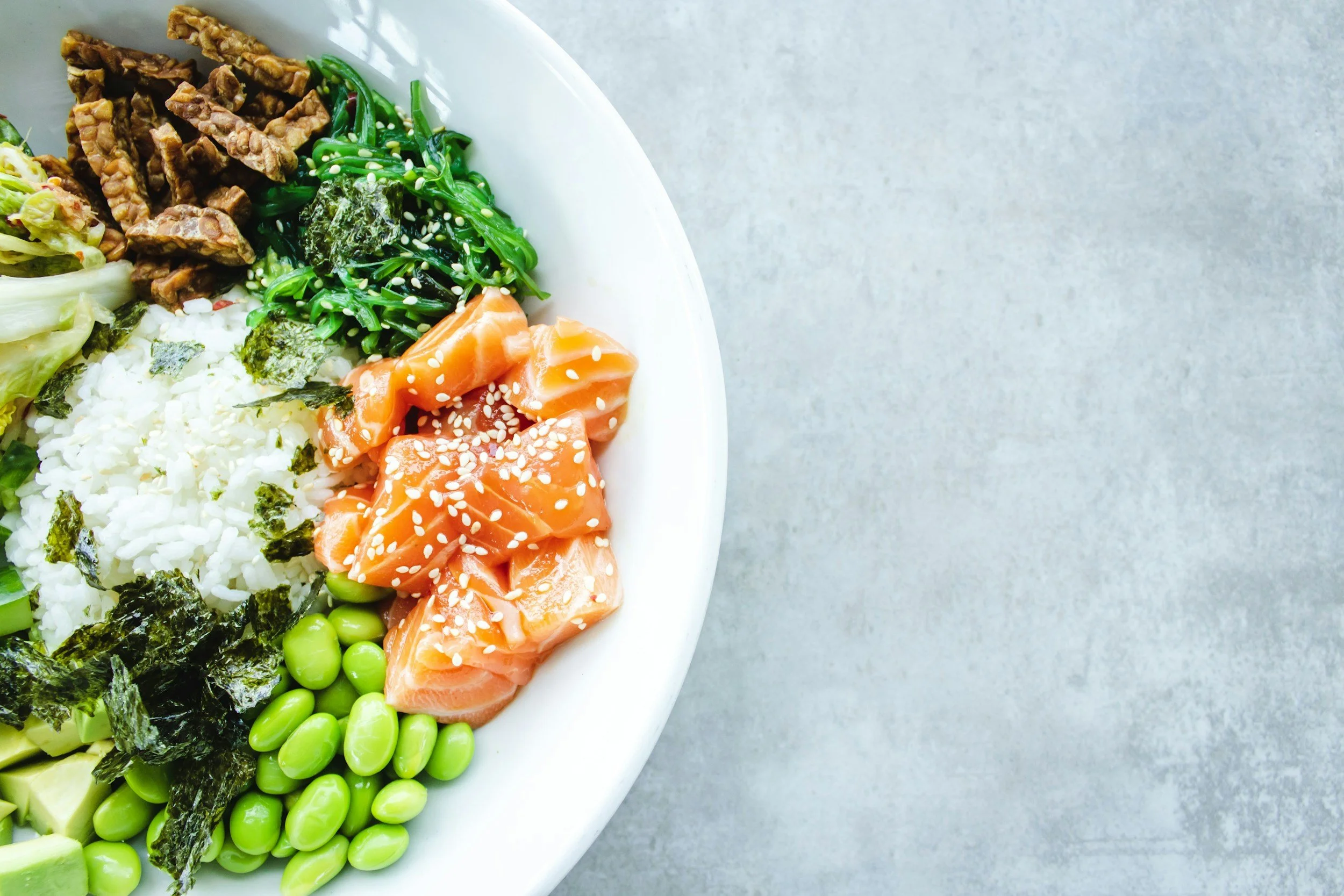
Fish and fish oils are the most commonly recommended way to add Omega-3s to your diet. Fish source their Omega-3s from one of the most natural sources of the fatty acids on the planet — algae. salmon has all three essential fatty acids. Within 100 grams of Salmon, you will find contains .541 grams of ALA, .318 grams of EPA, and .166 grams of DHA, according to the USDA.
Diet Tip: Replace a chicken, pork, or beef night with salmon to jump start your Omega-3s.
Mackerel
Like salmon, mackerel is another great source of fatty acids. It’s often sold as smoked and wonderful in full fillets. Mackerel is less common compared to salmon, but it remains a great source of EPA and DHA. According to the USDA, 100 grams of mackerel contains .504 grams of EPA and .699 grams of DHA.
Diet Tip: Lemon and herbs like parsley or dill are great pairings for mackerel and any fish.
Algae Oil
One of the most clean and easy way to reliably add fatty acids to your diet, algae oil comes straight from the source. Compared to the fishy taste of fish oil, algae oil is grown in clean labs and extracted for its DHA and EPA, which converts into ALA. Within 2 half droppers of Dr. Khalili’s Omega-3 Vegan Algae Oil, you can get 1 gram of DHA and .01 gram of EPA, according to its supplement facts.
Diet Tip: The citrus taste in Dr. Khalili’s Algae Oil goes great in a morning cup of tea or on its own.
Order Dr. Khalili’s Omega-3 Vegan Algae Oil today to take your Omega-3s and find your peace of mind.